
Why has the housing market turned so sharply?
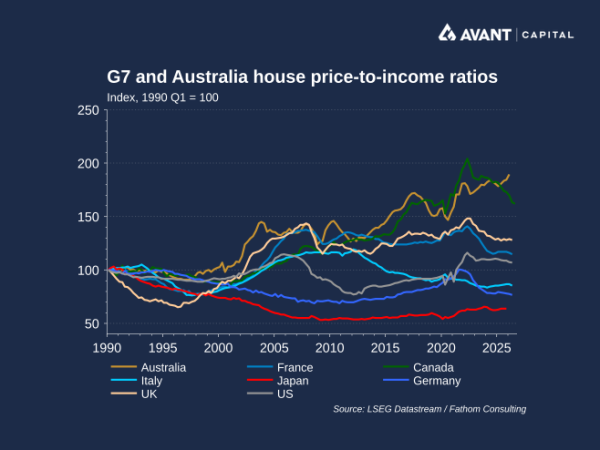
Australia’s housing downturn is no longer simply a story about prices retreating from elevated levels. Higher interest rates, reduced borrowing capacity, changes to property taxation and weakening buyer confidence are interacting across the market. The result is a slowdown in prices, transactions, mortgage demand and new construction that could carry consequences well beyond property.
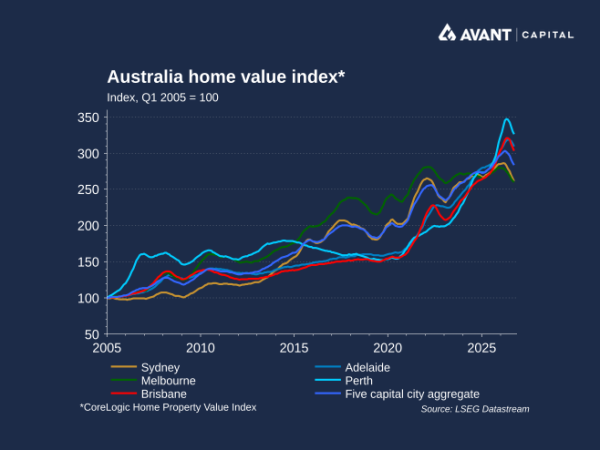
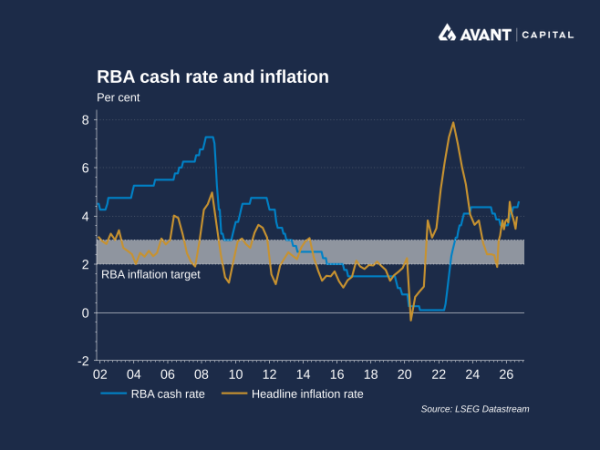
National home values are already 5.2% below their March peak, with Morgan Stanley forecasting a total decline of 10% to 15%1. September-quarter house prices fell in every capital city for the first time in 15 years. Sydney declined 4.7%, Melbourne 3.3% and Perth recorded a 7.4% quarterly fall. These falls reflect a rapid change in financial conditions. Four interest-rate increases from the Reserve Bank of Australia (RBA) in 2026 have lifted the cash rate to 4.6%, its highest level since late 2011.
Why do housing transactions matter more than prices?
Price movements dominate headlines, but the fall in housing turnover may cause more immediate economic damage. National home sales declined 17.4% in the three months to September according to Cotality2. Transactions fell 26.3% in Brisbane, 24.8% in Sydney, 23.9% in Perth and 18.4% in Melbourne.
When fewer homes change hands, the effects spread to mortgage brokers, conveyancers, removalists, cleaners, tradespeople, building inspectors and retailers furnishing newly purchased properties. State governments are also exposed because lower transaction volumes reduce stamp-duty receipts. In September, residential stamp-duty revenue in New South Wales fell 23% from a year earlier to $663.7 million, while the number of properties changing hands declined 20%3.
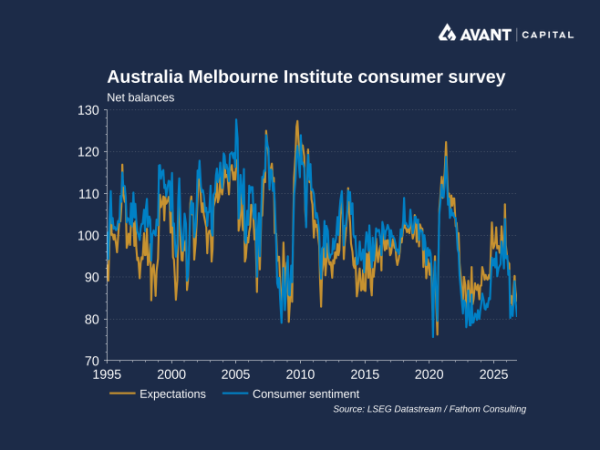
This gives the downturn a potentially self-reinforcing quality. Lower turnover weakens economic activity and public revenue, while declining household wealth can weigh on consumer confidence and spending. That pressure may become especially visible among discretionary retailers and businesses connected to home improvement and property transactions.
Could the correction make the supply shortage worse?
The most serious long-term risk is that a cyclical downturn in demand becomes a structural setback for housing supply. Stockland reported that inquiries from prospective buyers fell to 10,452 in the September quarter, nearly half their December-quarter level4. Its residential sales declined 29% from a year earlier, while inquiries were reported to have fallen 71%5. Mirvac recorded 429 lot exchanges during the quarter, down 30% annually, with leads declining 30% in three months.
Weak pre-sales make it harder for developers to secure project finance. At the same time, high construction costs and greater caution among private-credit providers are reducing the availability of funding. Banks and institutional investors are also becoming more selective, favouring established developers and projects with stronger financial foundations.
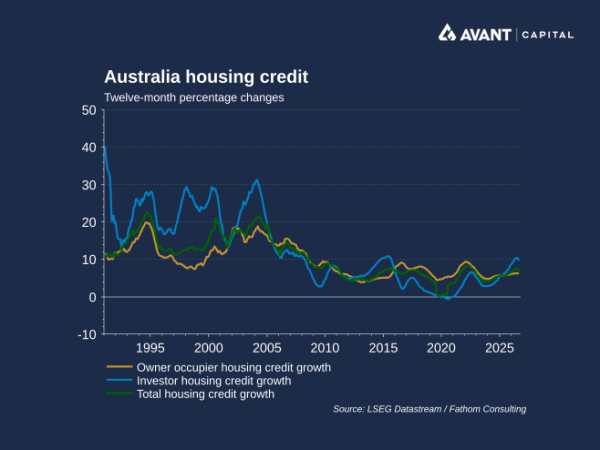
This creates an uncomfortable contradiction. Falling prices may provide some near-term affordability relief, but fewer viable developments mean fewer homes will be completed later. Housing demand supported by population growth may then meet an even smaller supply pipeline once financial conditions improve, potentially renewing affordability pressures.
What would show that the market has reached its floor?
Several indicators will matter more than any single monthly price result. A durable turning point is likely to require stabilising auction clearance rates, stronger sales relative to listings, easing monetary-policy expectations, more supportive housing policy and an improvement in the financial attractiveness of ownership compared with renting.
Morgan Stanley observed that previous market troughs since 2008 occurred after at least three of five such conditions had been triggered. As of October, none had been met, supporting its expectation that a sustainable trough may not arrive until the second half of 2027.
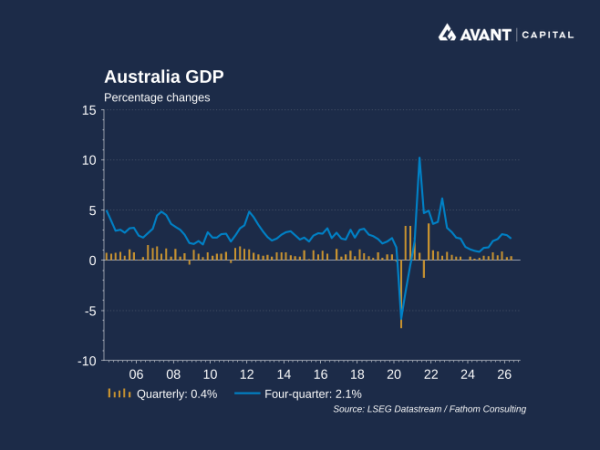
The path remains heavily dependent on inflation and interest rates. A weaker labour market could eventually reduce inflation and allow monetary policy to ease, but rising unemployment would also increase household stress and forced selling.
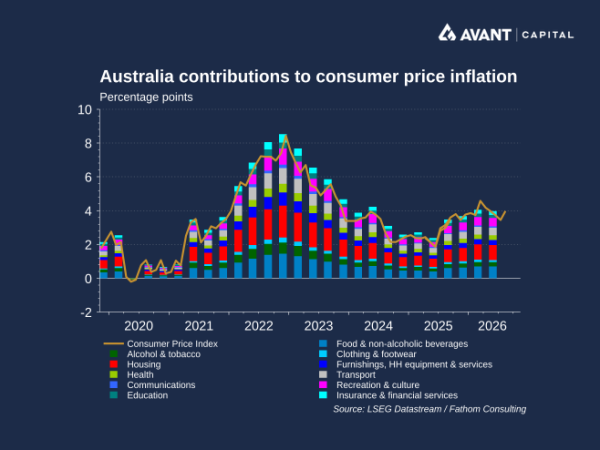
Conversely, persistent inflation could keep borrowing costs elevated even as the property market and economy weaken.
Where does the housing market go from here?
Australia’s housing correction is testing far more than homeowner confidence. It is squeezing borrowers, reducing state revenue, weakening businesses linked to property turnover and complicating the financing of new construction. The central challenge is therefore not merely how far prices fall, but whether the downturn damages the capacity to build the homes the country will eventually need.
A healthier market will require balance: inflation must ease sufficiently to relieve financing pressure, while housing policy, development economics and construction capacity must remain supportive enough to prevent today’s correction from becoming tomorrow’s supply crisis. Until transaction volumes stabilise and buyers begin returning without relying on excessive leverage, Australia’s housing market is unlikely to have found a convincing floor.
References
- The Australian Financial Review, “‘The backdrop has worsened’: Morgan Stanley flags 15pc house price hit,” 21 October 2026
- The Australian Financial Review, “The most painful housing market plunge is here. And it’s not prices,” 6 October 2026
- The Australian Financial Review, “Stamp duty revenue plunges as property downturn bites,” 12 October 2026
- The Australian Financial Review, “Stockland buyer inquiries sink to seven-year low in property downturn,” 19 October 2026
- The Australian Financial Review, “Something vital is breaking in housing. This 71pc plunge proves it,” 22 October 2026