
What did the latest results reveal about corporate Australia?
As the 2026 ASX reporting season draws to a close, investors are left with a picture that is neither disastrous nor particularly inspiring. While aggregate earnings growth finally returned after several years of stagnation, the broader message from corporate Australia was one of caution rather than confidence. Companies generally delivered results that met or modestly exceeded tempered expectations, but management commentary often pointed to slowing economic growth, persistent inflation pressures and increased uncertainty heading into FY27.
At a headline level, earnings growth across the Australian market has been respectable. Macquarie estimates ASX earnings per share growth of around 8.5% for FY26, while UBS estimates growth closer to 11.7%1. However, those numbers tell only part of the story. Excluding the mining and energy sectors, profit growth has been significantly weaker, with some estimates suggesting growth closer to 5%. This highlights a recurring theme throughout reporting season: Australia’s profit recovery remains heavily reliant on resources.
How important were the mining giants to earnings growth?
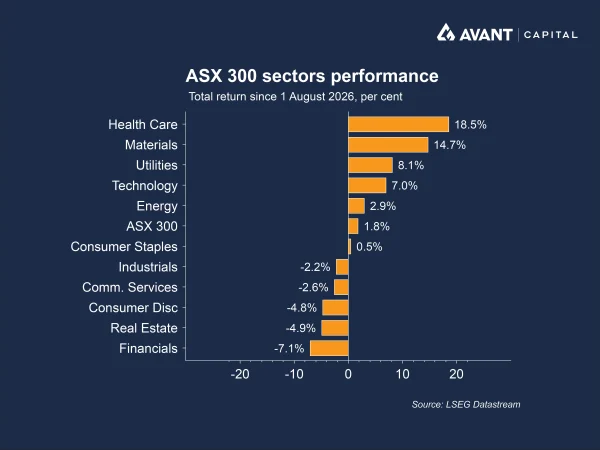
The materials sector was once again one of the standout performers of the season, led by BHP and the broader resources complex. The sharp rise in copper prices, alongside resilient iron ore and coal pricing, helped drive stronger earnings for the major miners.
BHP’s result demonstrated the importance of the resources sector to the broader Australian market. The company reported a 9% increase in net profit to $US9.8 billion, supported by a 35% increase in realised copper prices2. Significantly, copper earnings exceeded iron ore earnings for the first time in the company’s history, reflecting the structural demand emerging from electrification, artificial intelligence infrastructure and global data centre investment.
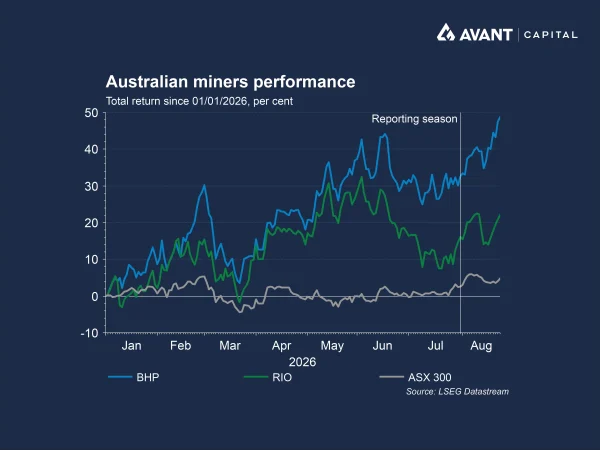
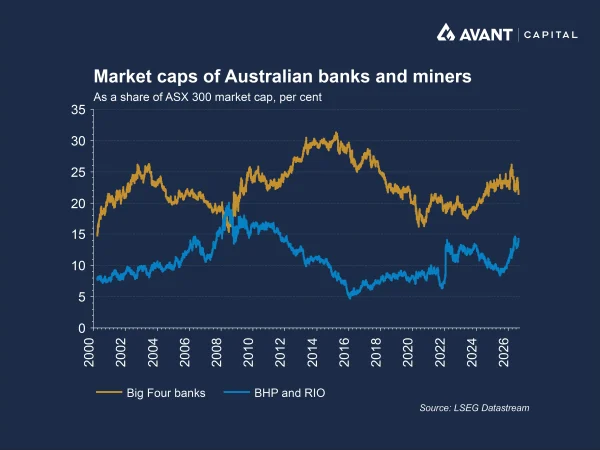
The mining sector’s strength has had an outsized impact on overall index earnings growth because of its large weighting within Australian sharemarket indices. Without the contribution of the major miners, earnings growth across the market would have looked far less impressive. This divergence between the resources sector and the broader economy was one of the defining features of reporting season.
Why did healthcare emerge as a surprise winner?
Healthcare was arguably the biggest positive surprise of the season. After a difficult period that saw several sector leaders endure earnings downgrades and significant share price declines, investors finally found reasons to become more optimistic.
CSL, Cochlear and Pro Medicus all delivered results that helped fuel a meaningful rebound in the sector. Importantly, the recovery was not necessarily driven by extraordinary earnings growth but rather by evidence that conditions may have stabilised after an extended period of disappointment.
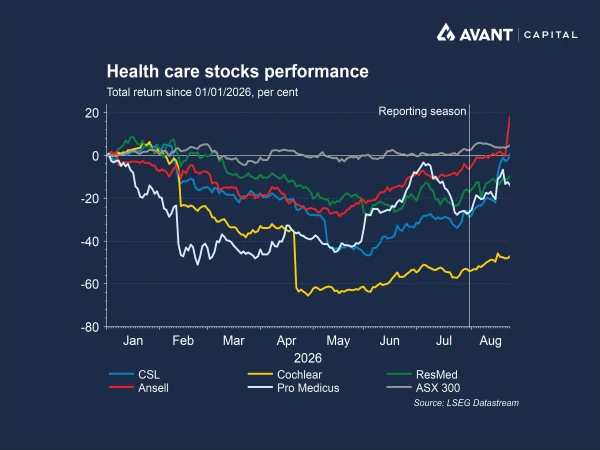
CSL’s result was particularly symbolic. Despite reporting its first annual loss since listing in 1994, driven by major Vifor-related impairments, investors focused on improving performance in its core plasma business and growing confidence that the worst of its earnings downgrade cycle may be behind it3. Cochlear’s results also benefited from substantially reduced expectations, while Pro Medicus continued to demonstrate strong earnings momentum and capitalise on growing healthcare technology opportunities.
Why are consumers and banks still under pressure?
If healthcare and materials were among the winners, financials and consumer discretionary companies were among the clear laggards.
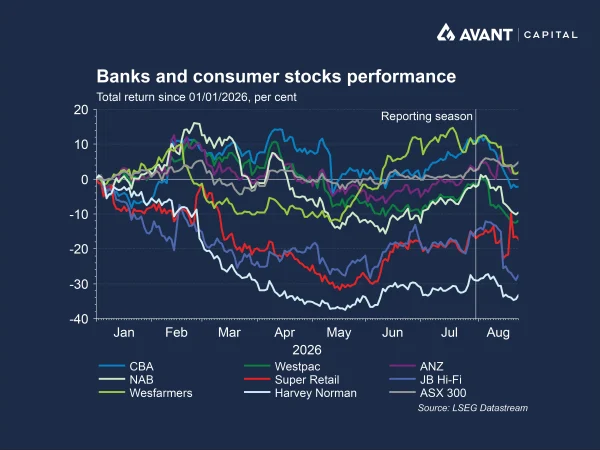
Retailers consistently highlighted a more challenging spending environment as households continue to grapple with higher borrowing costs, elevated living expenses and declining housing market activity. JB Hi-Fi, often viewed as a bellwether for Australian consumers, experienced a sharp share price decline despite delivering record sales and higher profits because investors focused on weakening sales momentum and a cautious outlook4.
The sector has been dealing with the cumulative impact of three RBA rate increases during 2026, higher energy costs following renewed tensions in the Middle East and weaker consumer confidence. Retail executives repeatedly noted that customers are becoming increasingly selective in their spending and are waiting for promotional events before making larger purchases.
The banking sector faced a different set of challenges but arrived at a similar conclusion. Major banks including NAB, Westpac and Commonwealth Bank pointed to slowing housing credit growth, falling mortgage applications and increasing uncertainty following the federal government’s property tax changes announced in the May budget.
Investor loan applications have fallen sharply across the banking sector as the combined impact of higher interest rates and the Federal Government’s housing tax reforms dampens demand. Commonwealth Bank revealed investor mortgage applications had fallen 28% since the May budget5, while Westpac reported a 26% decline6 and NAB disclosed a 17% fall in investor applications7. As housing credit growth slows and lending competition intensifies, banks are facing increasing pressure on margins and earnings growth. While bad debts remain low by historical standards, a rising number of customers are being placed on watch lists, reinforcing the sector’s cautious outlook.
What does the season tell us about valuations and income?
Another interesting theme to emerge was the market’s focus on dividends. In many cases, dividend outcomes appeared to have a greater influence on share price performance than earnings guidance itself.
This reflects a broader challenge facing Australian equities. Valuations remain above long-term historical averages in several parts of the market, yet earnings growth expectations have become increasingly subdued. The major banks, for example, entered reporting season trading on valuation multiples well above historical norms despite deteriorating housing market conditions and slowing credit growth.
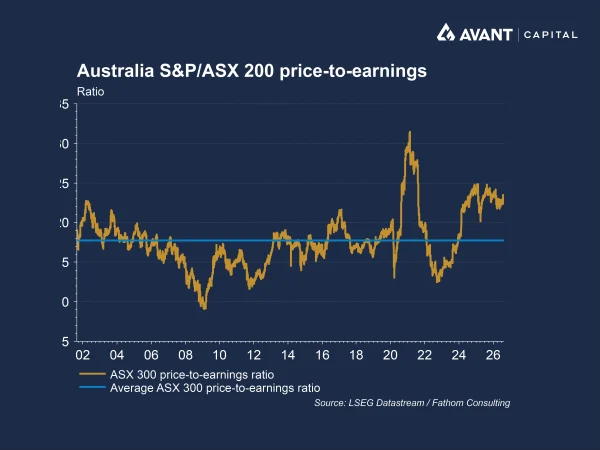
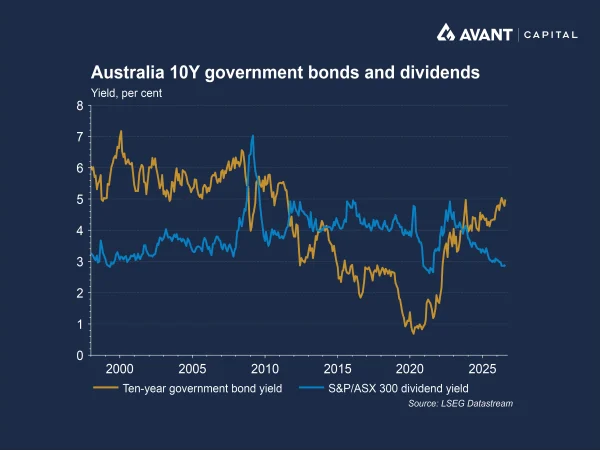
At the same time, dividend yields across the broader market remain relatively low by historical standards. With bond yields rising globally and fixed income offering more attractive income opportunities, equities may face increasing competition for investor capital.
What risks could shape markets after reporting season?
While reporting season largely focused on corporate results, investors remain highly aware of several macroeconomic risks.
Inflation continues to prove more persistent than many had hoped, with recent Australian inflation data increasing the prospect of further interest rate hikes. Rising global bond yields remain a challenge for equity valuations, particularly for growth stocks. Meanwhile, the ongoing US-Iran conflict has contributed to higher oil prices and added another layer of uncertainty to the global economic outlook.
These risks come at a time when Australia’s economic growth remains relatively modest and business confidence remains subdued.
Why is the ASX still lagging global markets?
Perhaps the most significant takeaway from reporting season is how dramatically Australian earnings growth continues to trail major global markets.
While ASX earnings growth has been in the high single digits, US companies have been delivering profit growth approaching 35% for 2026, driven by massive investment in artificial intelligence, cloud computing and digital infrastructure. European companies have also recorded stronger earnings growth than Australia.
The Australian market has generally underperformed many global peers throughout 2026, reflecting its limited exposure to the technology sectors driving global earnings growth and its greater dependence on banks, resources and mature income-generating businesses.
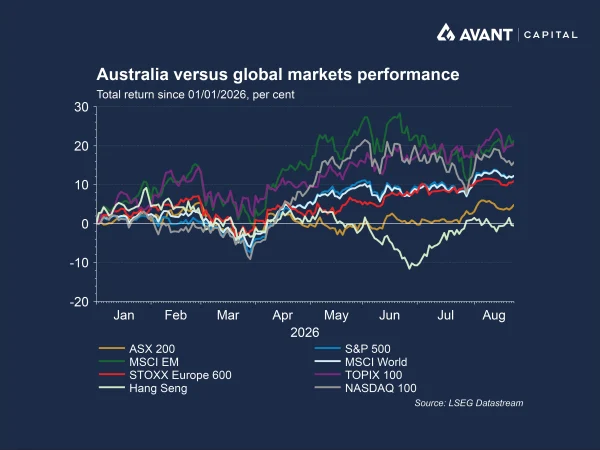
Reporting season reinforced this reality. Australia is benefiting from strong resource earnings and a healthcare recovery, but the broader market remains constrained by sluggish economic growth, cautious corporate guidance and limited participation in the global technology boom. As investors look ahead to FY27, the challenge for Australian companies will not simply be growing profits, but proving they can keep pace with a rapidly changing global economy.
References
- The Australian Financial Review, “Dividend dependent: Profit season exposes ASX’s missing animal spirits,” 16 August 2026
- The Australian Financial Review, “BHP’s big build gets under way as copper boom sends profits soaring,” 18 August 2026
- The Australian Financial Review, “CSL says blood-letting is over after plunging to $3.7b loss,” 18 August 2026
- The Australian Financial Review, “ASX is beating Wall Street even with ‘uninspiring’ profit results,” 24 August 2026
- The Australian Financial Review, “Matt Comyn just turned the housing crash story on its head,” 12 August 2026
- The Australian Financial Review, “Westpac’s plunge shows banking’s great mortgage shock just started,” 10 August 2026
- The Australian Financial Review, “NAB warns investor lending to fall in pessimistic outlook for property,” 17 August 2026