
What happened to gold’s record-breaking rally?
Gold has experienced an extraordinary reversal in 2026. After climbing to record highs in January, the precious metal has since retreated considerably and now sits well below its peak, marking a sharp change in momentum following its powerful rally.
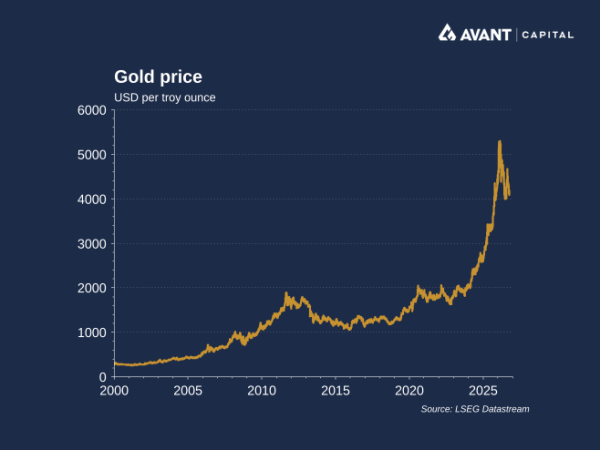
The correction followed an exceptional multi-year advance. Gold’s latest bull market began in 2018 and, by September 2026, had produced an annualised return of approximately 19%1. Its January peak was also the culmination of a particularly intense period of retail speculation, during which the price had roughly doubled in two years2.
By the end of June, gold was heading for its weakest quarter in more than a decade, having fallen nearly 14% over three months3. Gold appears to have moved from an unusually speculative phase into a market once again being shaped by interest rates, currency movements and demand from official institutions.
Why did geopolitical instability fail to support gold?
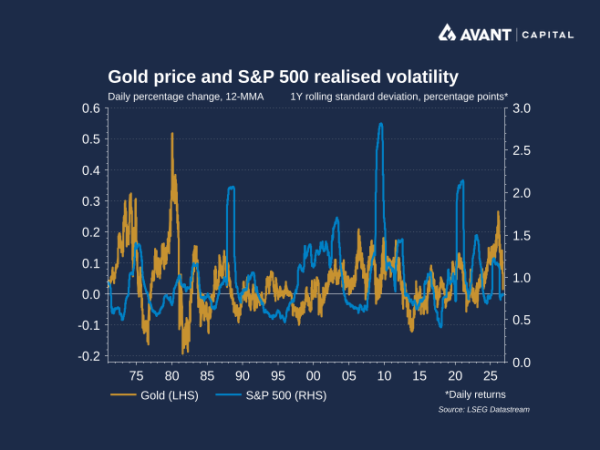
Gold is traditionally regarded as a safe-haven asset during war, financial stress and economic uncertainty. Its performance during the Middle East conflict therefore appeared counterintuitive. Rather than rising, gold fell sharply and moved well below the levels recorded before the conflict.
One explanation is that liquid assets are often sold during the early stages of a crisis. Investors facing losses elsewhere may sell gold to meet margin calls, reduce leverage or finance other positions. Historically, these liquidity pressures have weighed on gold following periods of market disruption, with recovery sometimes taking longer during a prolonged crisis.
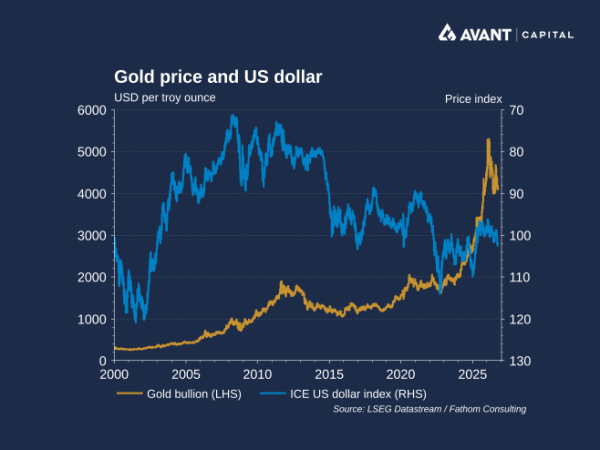
The conflict also drove oil prices and inflation expectations higher. Markets consequently moved from anticipating several US interest-rate cuts to considering the possibility of a rate increase. Because gold produces no income, higher bond yields increase the opportunity cost of holding it. A stronger US dollar added further pressure because gold is predominantly priced in dollars, making it more expensive for buyers using other currencies and potentially reducing demand.
How did speculative demand change the market?
Retail enthusiasm helped propel gold to its January high, but the same positioning made the market vulnerable when sentiment changed. Investors shifted attention towards artificial intelligence companies, semiconductor shares and major technology-related listings, reducing the appeal of trades that had previously benefited from fear of missing out.
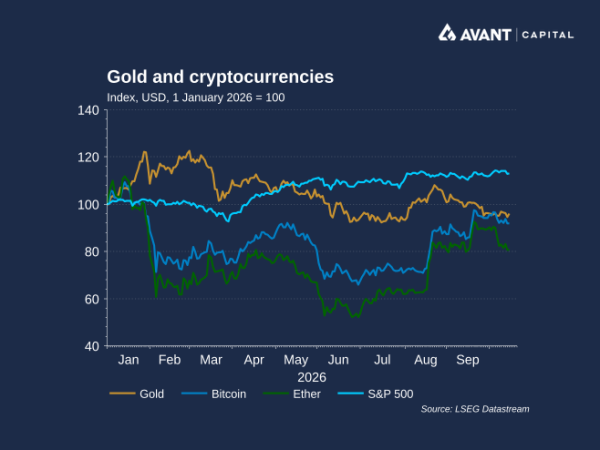
Gold-backed exchange-traded funds (ETFs) also experienced substantial withdrawals. According to the World Gold Council, global gold-backed ETFs recorded net outflows of 45 tonnes during the second quarter, equivalent to approximately $US4 billion, indicating that investor demand had weakened as gold prices retreated4.
Restrictions imposed by some Chinese banks on precious-metals futures trading also reduced retail participation. The combination of ETF outflows, a stronger dollar, higher real yields and fading speculative interest meant that gold temporarily behaved less like a defensive asset and more like a crowded risk trade being unwound.
Are central banks still providing a foundation?
Central-bank demand remains critical, but the available figures have been unusually difficult to interpret. An initial estimate of 244 tonnes of official-sector buying during the first quarter of 2026 was subsequently revised down to only 57 tonnes, the lowest first-quarter total in more than 15 years. Across the first half, central banks and other official institutions bought an estimated 345 tonnes, their lowest six-month total since 2022.
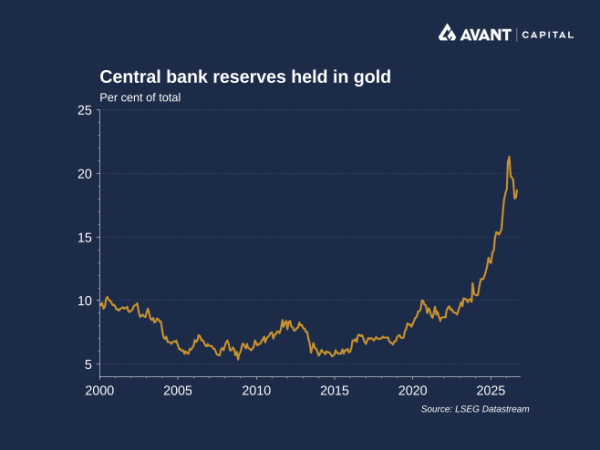
However, the slowdown was not necessarily permanent. Provisional data indicated that reported central-bank purchases reached approximately 63 tonnes in September, the strongest monthly level since November 20245. China’s central bank also continued adding to its reserves, with gold accounting for approximately 9% of total reserves, equivalent to about 2,410 tonnes.
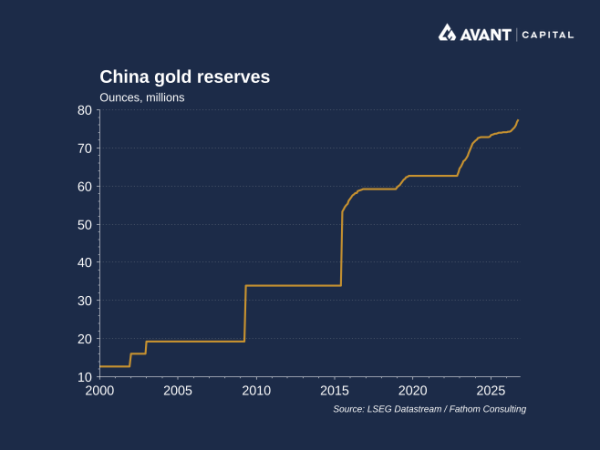
Has gold’s relationship with interest rates permanently changed?
Before 2022, a one-percentage-point increase in US real interest rates typically coincided with an approximately 14% decline in gold. That relationship weakened markedly after Western governments froze around $US630 billion of Russia’s foreign-exchange reserves, encouraging emerging-market reserve managers to reconsider their dependence on conventional government securities.
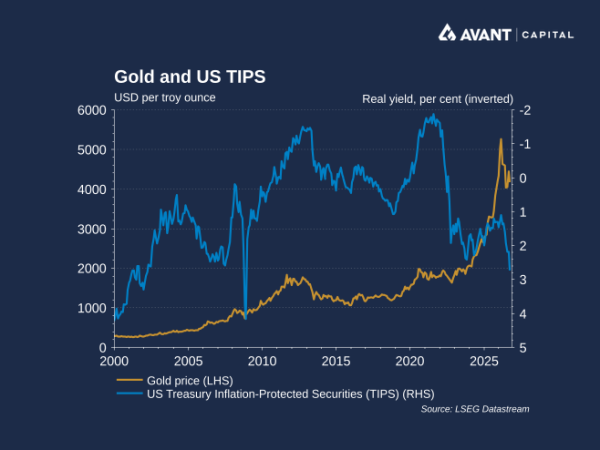
Between March 2022 and October 2023, US five-year real yields rose by more than four percentage points. Historical models implied that gold should have fallen by about 55%, yet it rose by 7%. Over the following two years, gold advanced by approximately 110% even though real yields fell by less than one percentage point.
More recently, the traditional relationship has partly re-emerged, with higher real yields and a stronger dollar weighing on bullion. This does not necessarily invalidate the structural case for gold. Instead, it suggests that short-term pricing remains sensitive to monetary policy even as sovereign demand and concerns about reserve security exert a longer-term influence.
What could determine gold’s next direction?
The immediate outlook may depend on whether inflation keeps interest rates elevated, whether ETF investors return and whether central-bank buying continues to recover. Persistent fiscal deficits, rising government debt, geopolitical fragmentation and concern about fiat currencies could support demand, while sustained high real yields and a durable return to bonds as portfolio diversifiers would present headwinds.
Gold’s correction has exposed the speculative excess behind part of its earlier rise, but it has not removed the forces that supported the broader bull market. Its next phase may be less dramatic and more volatile, with competing monetary, fiscal and geopolitical pressures producing an uneven path. Rather than providing a simple verdict on gold’s haven status, 2026 has demonstrated that the metal can serve as emergency liquidity, a speculative asset and a long-term reserve simultaneously.
References
- Financial Times, “Gold’s run isn’t yet done,” 3 September 2026
- Financial Times, “Gold sinks to 6-month low as speculative investors exit,” 11 June 2026
- Financial Times, “Gold heads for worst quarter in more than a decade as retail frenzy fades,” 1 July 2026
- Financial Times, “Central banks slashed their gold purchases in early 2026,” 30 July 2026
- Financial Times, “Investors predict new record price for gold within two years,” 15 October 2026