
Australian retailers are delivering an increasingly consistent message: households are cutting back, delaying major purchases and searching more aggressively for value. Although the pressure is most visible among businesses connected to housing, recent trading updates suggest it is beginning to spread across discretionary retail and into everyday shopping decisions.
The warnings come as falling property values, fewer home sales, elevated fuel prices and higher borrowing costs converge. Together, these forces are reducing both households’ capacity and willingness to spend. The result is not simply weaker retail demand, but a marked change in consumer behaviour that could persist well beyond the Christmas trading period.
Why does the housing slowdown matter so much to retailers?
Housing activity has an unusually powerful relationship with retail spending. A property transaction commonly triggers purchases of furniture, appliances, electronics, hardware and other household goods. When fewer homes change hands, those purchases disappear or are postponed.
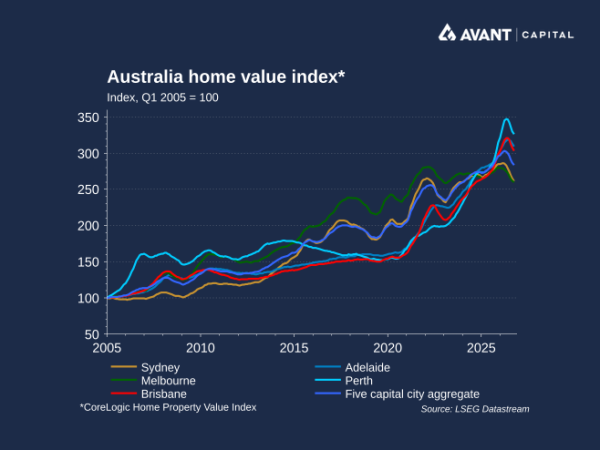
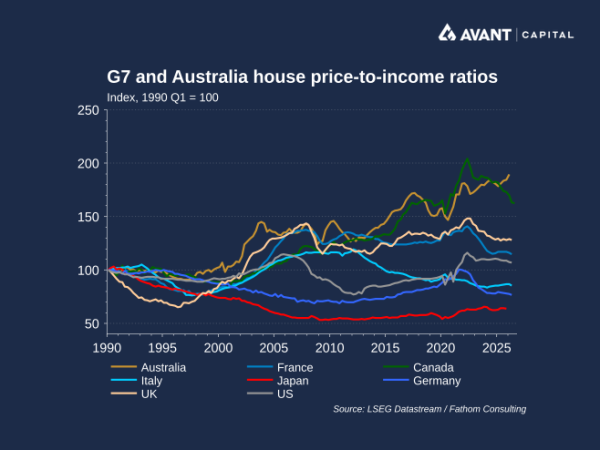
Australian capital-city dwelling prices have fallen by about 6.4%, while housing sales declined 17.4% in the three months to 30 September compared with the preceding period1. This housing slowdown is already being felt across the retailers most exposed to property activity. Furniture retailer Nick Scali was among the first to warn of depressed foot traffic and falling earnings, while Bunnings has reported moderating sales growth after recording growth of approximately 4% in the June half. The weakness now appears to be moving from furniture into appliances, electronics and other household goods, following the typical pattern of a housing-led retail downturn.
What are discretionary retailers seeing?
The clearest evidence is coming from retailers selling purchases that consumers can defer. JB Hi-Fi reported that comparable sales in its Australian electronics business fell 1.4% in the September quarter, while comparable sales at The Good Guys declined 0.4%2. The company also said sales slowed during October ahead of Black Friday and Christmas.
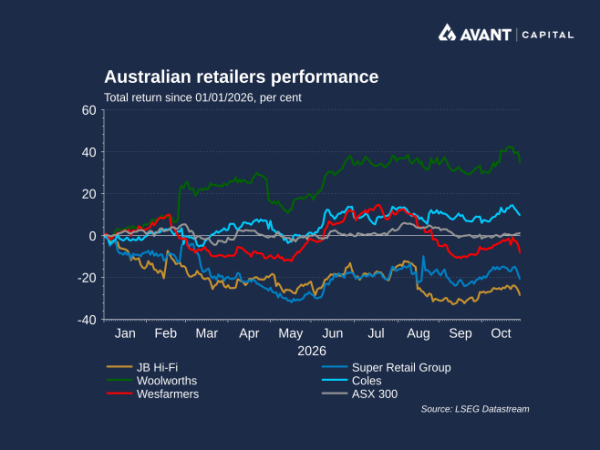
Consumers therefore appear to be doing more than simply spending less. They are changing when and how they shop, waiting for major promotional events rather than purchasing at full price. That behaviour may support headline sales during Black Friday, but it also places pressure on retailers’ margins and makes the underlying strength of demand harder to assess.
Super Retail Group, which owns Supercheap Auto, Rebel, BCF and Macpac, reported comparable sales growth of only 0.2% for the September quarter, down from 2% a year earlier. BCF recorded a 1.1% comparable-sales decline, while Macpac suffered an 11.7% fall.
Chief executive Paul Bradshaw identified fuel costs and interest rates as a “double whammy” for consumers. His observation is important because fuel-price increases affect household cash flow immediately, whereas higher interest rates can take three to six months to flow fully through mortgage repayments. That combination risks producing a prolonged squeeze rather than a brief interruption to spending.
How are supermarkets exposing the household squeeze?
Supermarkets are performing more defensively than housing-related retailers, but their sales mix reveals considerable financial pressure. Woolworths chief executive Amanda Bardwell said young families were experiencing an increasing level of budget stress3. Demand has shifted towards cheaper proteins such as beef mince, which recorded double-digit sales growth during the first quarter of the 2026–27 financial year.
Woolworths has benefited from investing more than $100 million in price reductions. Australian supermarket sales grew 6.9%, comparable sales increased 6.1% and own-brand sales rose 8.5%. Average prices nevertheless declined by 0.7%, indicating that transaction growth and value-seeking, rather than price inflation alone, supported the result.
The contrast with Coles is instructive. Its supermarket sales rose 3.6% to $10.3 billion, below expectations, while customers increased their use of promotions and loyalty programmes4. Chief executive Leah Weckert said households were shopping more deliberately across retailers and channels.
Why could interest rates deepen the slowdown?
Retailers’ warnings are arriving while inflation remains uncomfortably high. Headline inflation reached 4.3% in September, partly reflecting a 9.4% rise in petrol prices, while trimmed-mean inflation increased to 3.7%5.
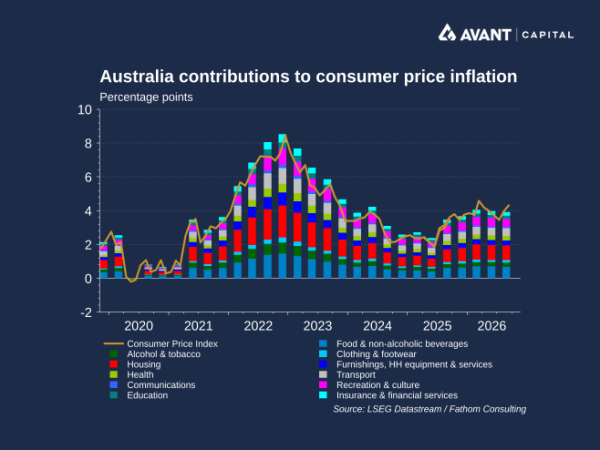
These figures strengthened expectations of further action from the Reserve Bank of Australia, despite clear signs that household demand and the housing market were already weakening.
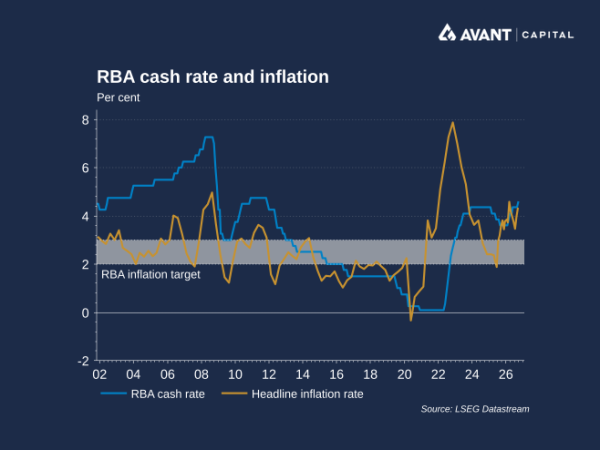
Another rate increase would affect retail through several channels. It would lift mortgage repayments, weaken consumer confidence and potentially place further downward pressure on property prices. Falling housing wealth may then create a broader negative wealth effect, causing even households that are not moving home to become more cautious.
What should we take from the retailers’ warnings?
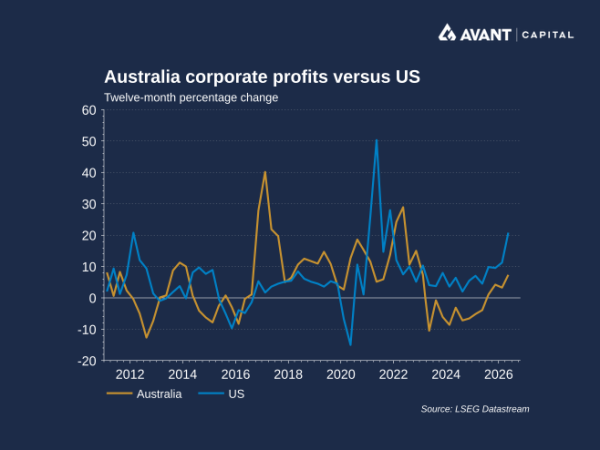
The retail downturn is neither universal nor evenly distributed. Groceries and other essential categories can still grow, particularly when retailers offer compelling value. However, the divide between essential and discretionary spending is widening, while competition for increasingly selective customers is intensifying.
The broader warning is that Australia may still be in the early stages of the slowdown. Fewer housing transactions are already hurting furniture, hardware and electronics. Higher fuel and mortgage costs are suppressing discretionary budgets, while supermarket shopping patterns show households trading down and comparing prices more carefully.
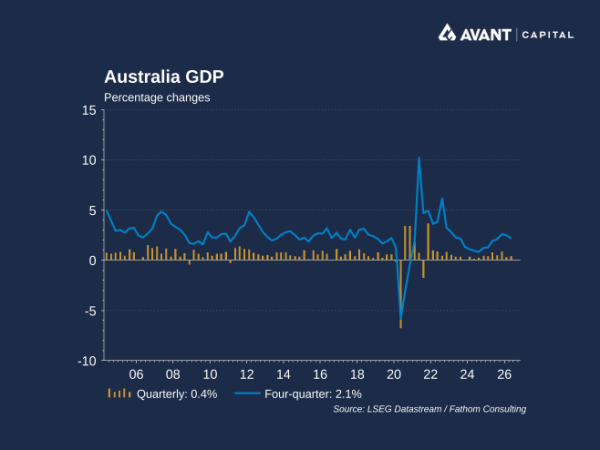
Retailers are therefore saying something significant about the economy: consumers have not stopped spending altogether, but they are becoming more defensive, promotion-dependent and reluctant to make large commitments. If housing activity falls further and interest-rate pressure persists, today’s weakness in housing-related retail could become tomorrow’s economy-wide consumer slowdown.
References
- The Australian Financial Review, “Housing correction is smashing Bunnings, JB Hi-Fi. The pain will spread,” 29 October 2026
- The Australian Financial Review, “‘Diabolical’: Retailers brace for rate rise blow to Black Friday sales,” 29 October 2026
- The Australian Financial Review, “Woolworths hails price-cutting drive for keeping sales growth on track,” 28 October 2026
- The Australian Financial Review, “Coles shares dive after supermarket giant warns on sales, profit,” 30 October 2026
- The Australian Financial Review, “Inflation spike pushes RBA on rates, Chalmers on spending cuts,” 28 October 2026