
For much of the past three decades, Australia’s housing market has been a powerful source of wealth creation, economic activity and consumer confidence. Rising house prices supported borrowing, spending and business investment, while housing turnover generated activity across industries ranging from banking and construction to retail, legal services and home furnishings.
That dynamic is now being tested. Following three Reserve Bank interest rate increases in 2026 and the federal government’s changes to negative gearing and capital gains tax concessions for investors, Australia’s housing market has entered a broad-based slowdown.
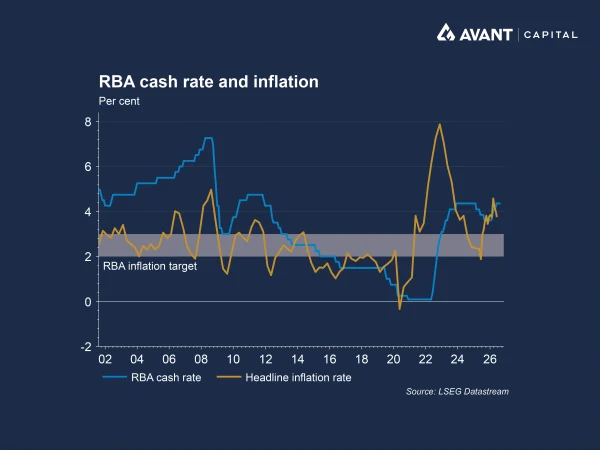
Auction clearance rates have fallen sharply, mortgage applications have weakened, transaction volumes have dropped and house prices are declining across most major markets.
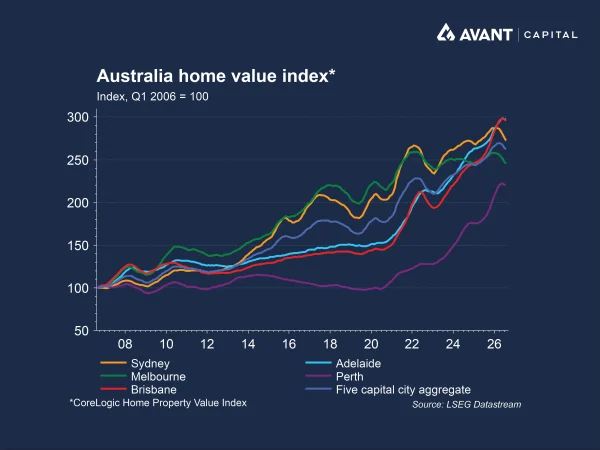
The key question is no longer whether the housing market is slowing. It is how far that slowdown could spread through the broader economy.
Why has the housing market slowed so sharply?
While the housing market was already under pressure from rising interest rates, the May federal budget accelerated the downturn by reducing the attractiveness of residential property investment.
The changes to negative gearing and capital gains tax concessions have significantly weakened investor demand, while higher borrowing costs have reduced purchasing power for owner-occupiers. At the same time, buyers have increasingly adopted a “wait and see” approach, preferring to delay purchases if they believe prices may be lower in six or twelve months’ time.
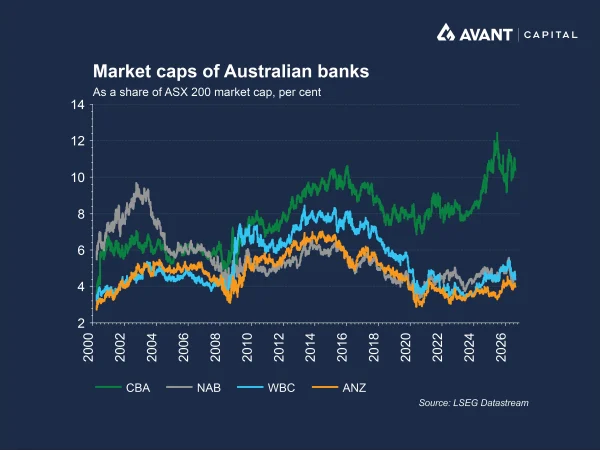
The impact is now evident across the banking sector. Since the budget, mortgage applications have fallen 20% at Westpac, 15% at NAB, 15% at Commonwealth Bank and 12% at ANZ1. Investor mortgage applications at Commonwealth Bank alone have plunged 28%2. The slowdown in mortgage activity could have implications beyond the banking sector itself. Australia’s major banks are among the largest constituents of the ASX 200, meaning any sustained pressure on credit growth, mortgage volumes and earnings could have an outsized influence on broader sharemarket performance, superannuation returns and household wealth.
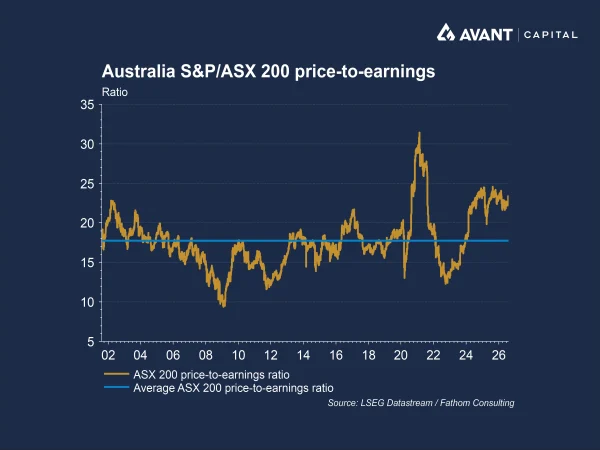
The risk may be amplified by the fact that the Australian sharemarket is currently trading on valuations above long-run historical averages, potentially leaving less room for earnings disappointments from some of its largest companies.
Auction markets are telling a similar story. National clearance rates have remained below 60% for an extended period3, while auction listings are down almost 20% compared with a year ago as vendors choose to withdraw properties or postpone selling altogether4. The decline in turnover is particularly important because housing transactions support a wide range of industries, from real estate agencies and mortgage brokers to retailers, tradies and removalists.
How does the housing slowdown affect consumer spending?
The most obvious economic transmission mechanism is the so-called wealth effect.
Housing represents roughly 57% of household assets in Australia. When property values rise, households tend to feel wealthier and are more willing to spend on discretionary purchases. When prices fall, the reverse occurs.
Importantly, this does not mean homeowners immediately stop spending because their house is worth slightly less. However, falling property prices can gradually erode confidence and reduce consumers’ willingness to make large purchases. The Reserve Bank has already warned that lower house prices are expected to weigh on consumer spending, while several economists have highlighted the risk of a negative wealth effect emerging if the downturn persists5.
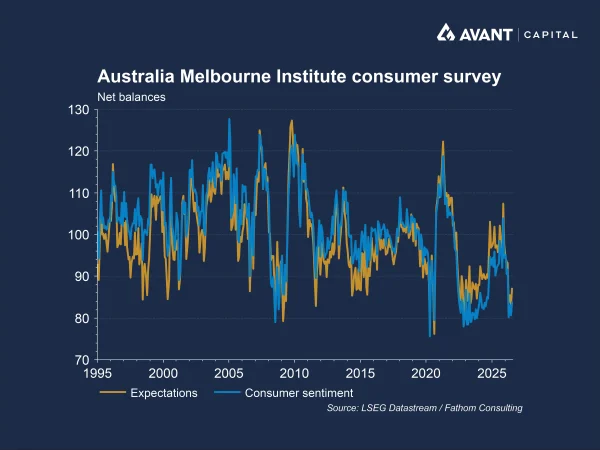
The slowdown in housing turnover can also have a direct impact on spending. Fewer property transactions mean fewer renovations, fewer furniture purchases, fewer appliance sales and reduced demand for services such as removalists, conveyancers and property stylists.
This appears to be showing up in corporate results. Myer reported a sharp deterioration in trading conditions following the federal budget, with sales falling 5.5% in June and 4% in July as consumers became increasingly cautious. Management cited a combination of higher interest rates, rising living costs and weaker housing conditions as key contributors.
Could mortgage stress become a bigger risk?
At this stage, widespread mortgage distress remains unlikely.
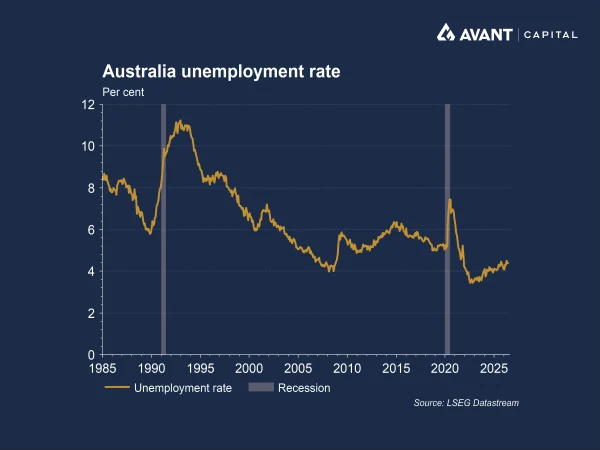
Australia enters this downturn with unemployment still relatively low and the labour market generally resilient. Most households continue to prioritise mortgage repayments above almost every other category of spending.
This distinction is important. Cost-of-living pressures do not automatically translate into mortgage defaults. In most cases, households respond by reducing discretionary spending first. They eat out less often, delay holidays, postpone renovations and defer major purchases. That hurts the broader economy before it creates widespread financial stress within the banking system.
For a significant mortgage stress event to emerge, a material deterioration in employment conditions would likely be required. As several analysts have noted, unemployment remains the key variable to watch. If households lose income because of job losses, the risk of forced property sales and negative equity increases meaningfully. So far, arrears remain low across the major banks despite a modest rise in delinquencies.
What does lower housing activity mean for growth?
One of the most underappreciated aspects of housing downturns is the impact on transaction volumes.
In many property downturns, activity falls faster than prices because both buyers and sellers step back from the market. Sellers hesitate to accept lower prices, while buyers wait for conditions to improve. The result is a sharp decline in turnover. Australia is already seeing this dynamic. Auction volumes have fallen almost 20% year-on-year.
Lower turnover matters because housing activity supports a surprisingly large ecosystem of economic participants, including banks, mortgage brokers, developers, real estate agencies, tradespeople and retailers. A slowing housing market therefore creates a much broader economic drag than falling prices alone would suggest.
Is Australia’s property slowdown only just beginning to affect the economy?
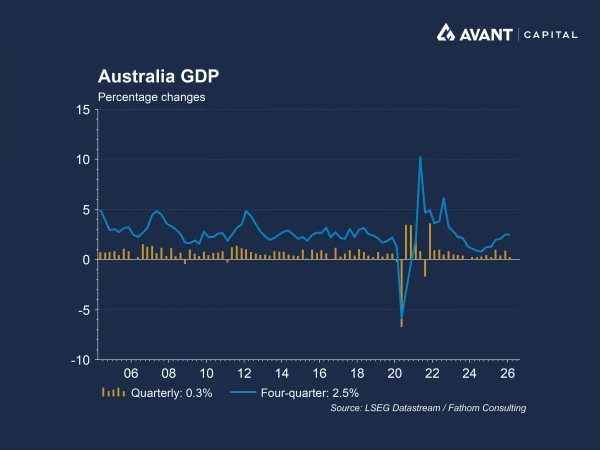
The Reserve Bank expects house prices to continue declining and has warned that lower prices will reduce dwelling investment and construction activity. That creates another challenge because Australia already suffers from a chronic housing undersupply.
Developers are becoming increasingly reluctant to commence new projects as falling prices combine with elevated building costs and financing pressures. While that may slow economic activity in the near term, it could also worsen housing shortages over the longer term, potentially placing upward pressure on rents and affordability in future years.
The broader outlook therefore remains finely balanced. Lower house prices may improve affordability and reduce inflationary pressures, potentially limiting the need for additional interest rate increases. Yet those same price declines risk weakening consumer spending, housing investment and business confidence.
Australia’s housing correction is unlikely to become a crash given the country’s structural housing shortage and ongoing population growth. However, even a moderate downturn can have meaningful consequences in an economy where property has become such a dominant source of household wealth. The biggest risk may not be falling house prices themselves, but the gradual drag they exert on confidence, spending and economic activity across the entire system.
References
- The Australian Financial Review, “ANZ quarterly profit nudges up to $1.9b, mortgage applications drop,” 13 August 2026
- The Australian Financial Review, “Matt Comyn just turned the housing crash story on its head,” 12 August 2026
- The Australian Financial Review, “’Worst in 30 years’: Housing panic is infecting the economy. Just ask Myer,” 27 July 2026
- The Australian Financial Review, “Sydney, Melbourne property slump drives 20pc drop in auctions,” 2 August 2026
- The Australian Financial Review, “RBA warns house prices have further to fall,” 11 August 2026