
Australian private credit has been one of the fastest-growing segments of the investment market over the past decade. As banks retreated from parts of property and development lending following tighter regulation, private credit managers stepped in to fill the gap, offering borrowers faster access to capital and investors attractive yields. The sector has now grown to an estimated $250 billion, with property and construction lending representing a significant proportion of total exposures1. However, as Australia’s property market softens and financing conditions tighten, cracks are beginning to emerge across parts of the industry.
Why are property market conditions becoming more challenging?
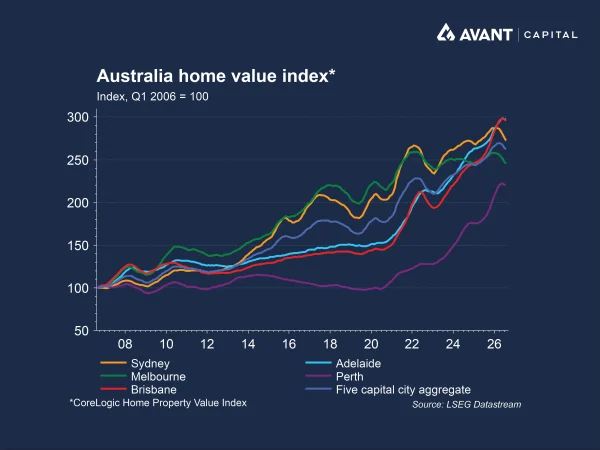
The operating environment for property developers has become increasingly difficult. According to recent analysis from Morgan Stanley, three interest rate increases during 2026, higher construction costs and weakening property sentiment have created a more challenging backdrop for developers and their lenders2. In addition, concerns have emerged that recent Federal Government tax changes could further pressure housing demand and investment activity, particularly in Sydney and Melbourne where many private credit exposures are concentrated.
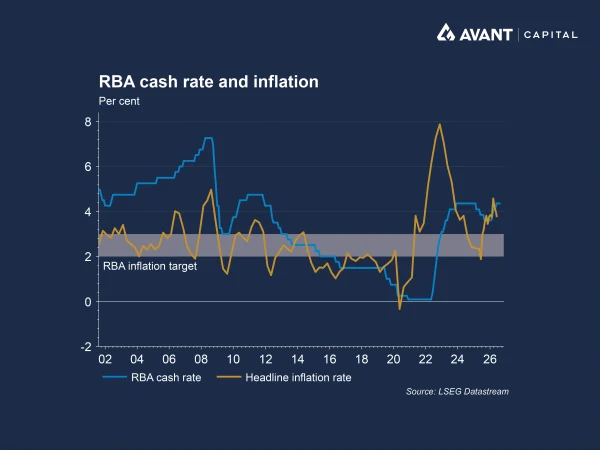
The Reserve Bank of Australia has also warned that Australian private credit funds have material exposure to development and construction projects. Internal RBA documents revealed concerns that a housing market correction, falling property values or sustained increases in construction costs could amplify financial stress throughout the sector. The central bank expects default rates across private credit to rise during 2026 as economic conditions deteriorate.
What does the Bathla situation reveal about emerging risks?
Perhaps the most widely discussed example of these risks is the growing distress surrounding Sydney developer Bathla Group. Once a major participant in Western Sydney housing developments, Bathla has accumulated debts exceeding $3 billion, largely owed to private credit providers3. The company has reportedly struggled with supplier payments, project delays and refinancing challenges while lenders have increasingly become involved in funding subcontractors directly to keep developments moving.
The Bathla situation highlights one of the key risks facing private credit markets today: refinancing risk. During the years of strong property prices and low funding costs, many developers relied on the ability to refinance existing debt facilities as projects progressed. However, weaker property conditions, softer pre-sales and higher interest costs have reduced refinancing options and increased pressure on borrowers already carrying high debt levels.
As a result, some lenders have extended loan terms, increased facilities or capitalised interest payments while waiting for projects to complete and generate cash flows. While these measures can provide temporary relief, they may also increase portfolio risks if property conditions continue to weaken.
How has the Centuria Bass exposure affected market confidence?
Concerns escalated further when Centuria Bass, part of ASX-listed Centuria Capital, found itself under scrutiny due to its exposure to Bathla-related loans4. Reports indicate that a loan initially presented to investors as a relatively low-risk facility deteriorated only months after being refinanced, ultimately requiring additional funding and resulting in much higher loan-to-value ratios.
Ratings agency SQM subsequently downgraded the Centuria Bass Credit Fund, citing concerns around changes to investment guidelines that allowed greater borrower and geographical concentration. The downgrade triggered warnings that the fund could face investor redemptions and reduced future inflows. Morningstar also lowered its valuation of Centuria Capital, highlighting concerns that governance issues in private credit could spill over into broader funds management operations.
Market concerns intensified further when Centuria Bass temporarily paused redemptions on two private credit funds after a spike in investor withdrawal requests linked to Bathla-related concerns5. The firm said the measure was designed to ensure investors were treated fairly and equitably, highlighting how negative developments in a large property borrower can quickly translate into liquidity pressures for private credit managers.
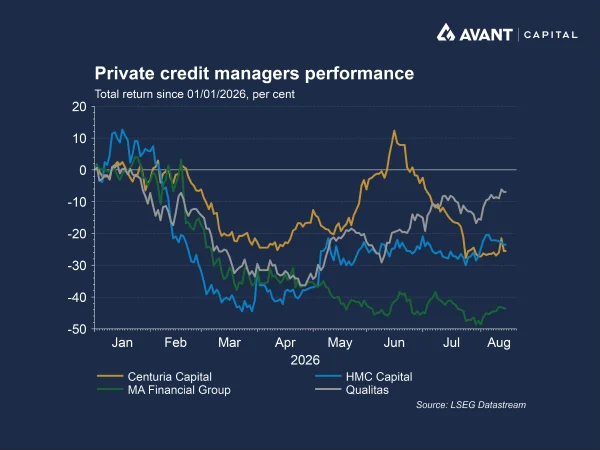
Importantly, the impact has not been limited to underlying loan performance. Concerns have also begun affecting investor behaviour, fund flows and liquidity management across parts of the sector. Listed companies with exposure to private credit and property markets have also suffered share price declines as investor sentiment has weakened. Alongside significant falls in Centuria Capital’s share price during 2026, other listed alternative asset managers and private credit participants including HMC Capital have also experienced share price pressure as investors reassess property-related earnings and valuation risks across the sector.
Why are regulators increasing their scrutiny?
ASIC and the RBA have both become increasingly vocal about risks within the private credit sector6. ASIC recently completed a review covering 52 private credit funds overseeing $76 billion and concluded that some valuations may be “lagging economic reality.” The regulator cited concerns around property development exposures, cost escalation, project delays, weaker refinancing conditions and unsold stock.
Valuation practices have become a particular focus. Unlike listed securities, private credit assets are not priced daily by the market, meaning underlying stress can take longer to appear in reported valuations. ASIC has warned that investors may not always fully appreciate risks if loan values are not adjusted quickly enough to reflect changing conditions.
Where does the sector go from here?
Australian private credit remains an important source of funding for businesses and developers, and many institutional investors continue to increase their exposure to the asset class. However, the combination of rising defaults, weaker property market conditions, refinancing challenges and growing regulatory scrutiny suggests the sector is entering a more difficult phase of its development.
The key question for investors is whether current stresses represent isolated cases or the early signs of broader credit deterioration. With property lending accounting for an estimated 40 to 60 per cent of Australia’s private credit market, the health of the property sector is likely to remain the most important factor determining outcomes for private credit managers over the coming years7. As the Bathla and Centuria situations demonstrate, slowing property markets can quickly expose risks that remained hidden during the boom years.
References
- The Australian Financial Review, “RBA bracing for private credit default rates to increase,” 12 July 2026
- The Australian Financial Review, “Morgan Stanley says property downturn creating private credit headache,” 12 August 2026
- The Australian Financial Review, “This developer could be private credit’s ticking time bomb,” 14 July 2026
- The Australian Financial Review, “Centuria credit fund faces ‘wave of redemptions’ over Bathla exposure,” 28 July 2026
- The Australian Financial Review, “Centuria freezes credit fund redemptions amid Bathla exposure fears,” 14 August 2026
- The Australian Financial Review, “ASIC says private credit valuations are ‘lagging… economic reality,’” 18 June 2026
- The Australian Financial Review, “Private credit: A reality check or just growing pains?” 23 June 2026