
Australia’s latest Intergenerational Report offers a 40-year view of an economy expected to become larger, older and more technologically intensive, but also slower-growing than it was over the previous four decades. Its central economic message is that productivity, more than population growth or workforce participation, will determine the path of incomes, corporate activity and living standards through to 20661.
The report’s baseline projections are not predictions of individual economic cycles. Instead, they illustrate how long-term forces such as demographics, technology, investment and labour supply could interact. For businesses and financial markets, the result is a future in which aggregate growth may moderate while the distribution of profits, investment and employment changes substantially.
How much could Australia’s economic growth slow?
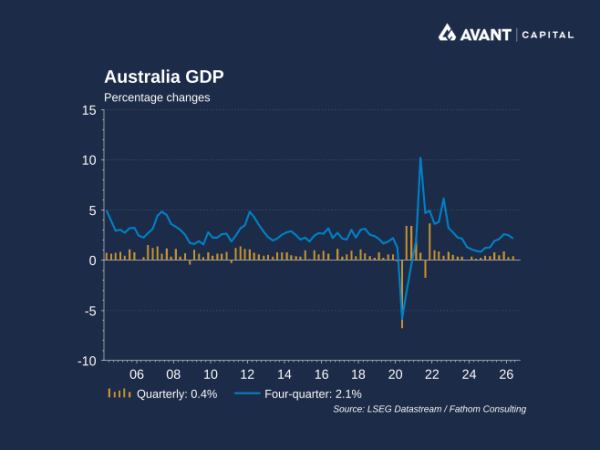
Real gross domestic product is projected to grow by about 2% annually over the next 40 years, compared with approximately 3% over the previous four decades2.
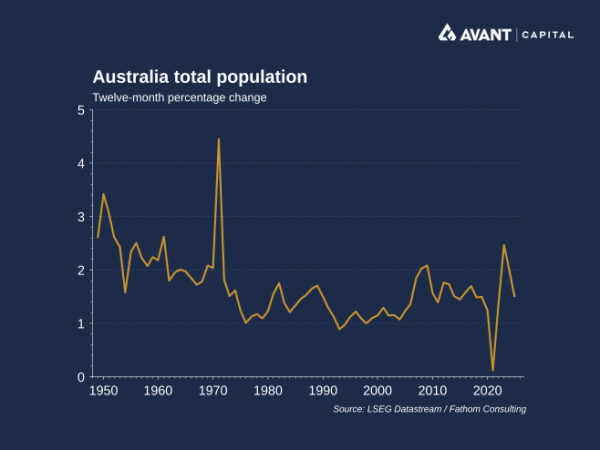
Population growth is expected to slow from an average of 1.4% to 0.9% a year, with Australia’s population reaching just under 40 million by 20663.
This slower expansion matters for companies because nominal revenue growth is generally easier to achieve when the economy and population are expanding rapidly. A lower-growth environment does not preclude strong corporate earnings, but it may place greater emphasis on market-share gains, productivity improvements, pricing power and international revenue. Businesses exposed primarily to mature domestic markets may face a different demand profile from companies linked to technology, infrastructure or expanding service requirements.
Growth per person will depend particularly heavily on productivity. Under the report’s baseline assumption of 1.2% annual productivity growth, real GDP per person rises from $99,200 to $157,300 by 2065–66. At 0.8% productivity growth, it reaches only $136,600, while a 1.6% outcome lifts it to $181,0004.
The productivity outlook also has significant implications for government debt and deficits. Under the report’s baseline scenario, the budget deficit is projected to narrow before widening to 1.8% of GDP by 2066, while gross government debt declines from 33.1% of GDP currently to 27.4%. However, if annual productivity growth averages only 0.8%, the deficit could reach 4.2% of GDP and gross debt could rise to 55.9% by 2065–665.
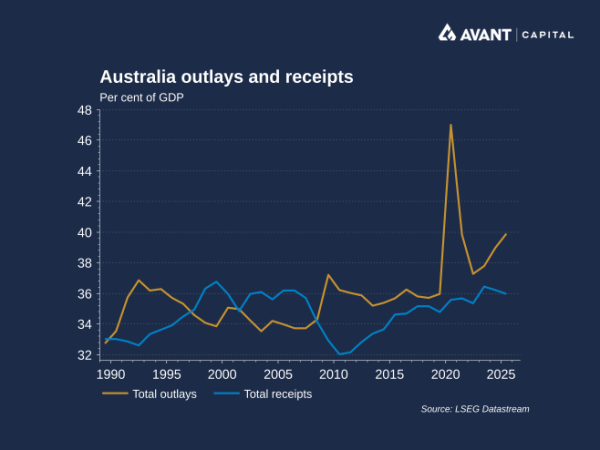
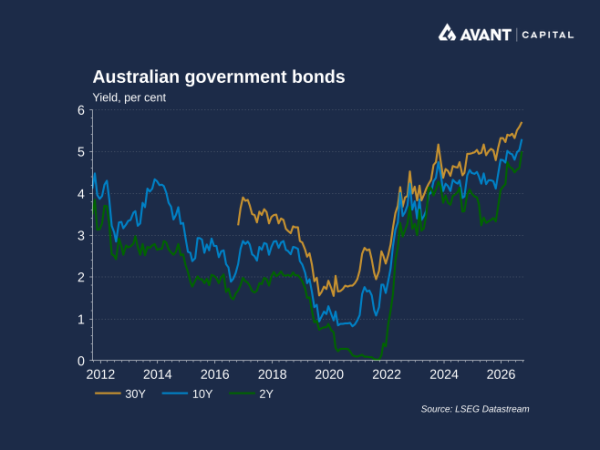
These outcomes could influence financial markets through government borrowing requirements, debt-servicing costs and long-term bond yields, with potential flow-on effects for the cost of capital faced by Australian businesses.
Why is productivity the report’s most important economic variable?
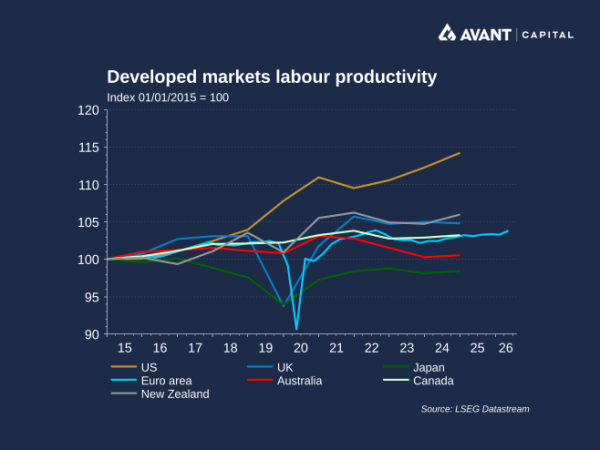
The baseline assumes labour productivity returns to its 30-year average of 1.2% within five years, despite productivity having been close to stagnant over much of the past decade and lagging that of many other advanced economies6. The report identifies the end of the mining investment boom, limited major technological innovation, weaker competitive pressure and declining business dynamism as contributors to the slowdown.
Artificial intelligence (AI) is central to the productivity scenario, although its eventual impact remains uncertain. Estimates considered by Treasury imply productivity outcomes ranging from 0.8% to 1.6% annually. The baseline effectively assumes that AI develops into a general-purpose technology comparable with electricity, computers and the internet.
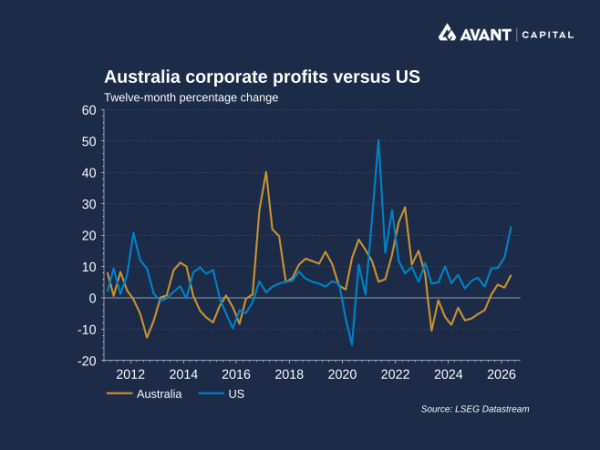
For corporate profits, the transmission mechanism could operate through lower operating costs, faster analysis, improved logistics, greater output per employee and the redesign of administrative and professional tasks. Benefits may appear as higher margins, stronger wages or lower prices, depending on competition and how broadly the technology is adopted. Industrial relations arrangements could affect how readily businesses redesign roles and workflows, potentially causing Australian corporate profit growth to lag global peers if AI adoption proceeds more slowly. Treasury also notes the possibility of concentrated AI markets, where control of computing capacity, cloud infrastructure and advanced models could affect pricing and competition.
How could the labour market change as the population ages?
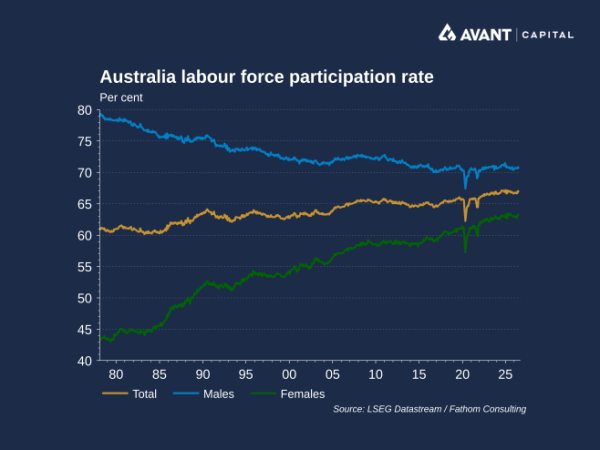
The labour-force participation rate is projected to rise from 66.9% to 67.7% by 2040, supported by greater participation among women and older Australians7. It then falls to 64.7% by 2066 as population ageing becomes the dominant influence.
The population aged 65 and over is projected to grow by 87.1%, while the number of people aged over 85 is expected to triple8.
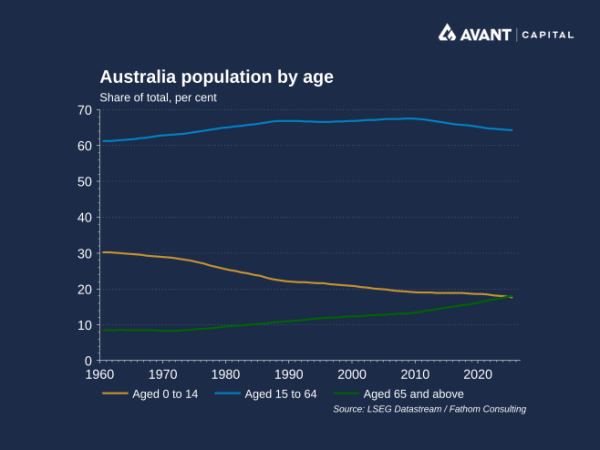
These changes could tighten labour availability in parts of the economy even if total employment continues to grow. The composition of employment is also likely to shift towards health, aged care and other services associated with an older population. Because some non-market services record lower measured productivity than sectors such as mining and financial services, this structural shift may weigh on economy-wide productivity statistics even as those services expand.
What could the outlook mean for inflation and interest rates?
The report presents technology as potentially disinflationary because greater productivity can reduce the cost of producing goods and delivering services. Some of the benefits of AI may therefore appear through lower prices rather than entirely through higher incomes or corporate margins.
However, the broader environment may remain exposed to inflationary pressures. Supply-chain disruption, energy-market shocks and geopolitical fragmentation can raise input, transport and insurance costs. At the same time, strong investment in digital infrastructure could increase demand for energy, construction capacity, equipment and specialised labour.
Sustained improvements in productivity may also lift the economy’s neutral interest rate, which Treasury associates with higher average bond yields. Large global spending programs for AI and data centres could intensify competition for capital, while higher borrowing costs would affect business valuations, financing expenses and required investment returns.
How might business investment and markets respond?
The report points to a substantial investment cycle connected with AI infrastructure, including an estimated $150 billion of Australian data-centre investment by 2030, equivalent to about 5% of GDP. This could lift demand across construction, electricity, networks, cooling systems, software and professional services, although the scale of investment may also place pressure on capital and operating costs.
For equity markets, slower trend GDP growth may provide a less supportive background for aggregate earnings than investors experienced during earlier decades. Outcomes across companies are nevertheless likely to diverge. Businesses that successfully convert technology investment into higher output, lower unit costs or new products may experience a different earnings path from firms facing weak productivity, rising labour costs or heavy capital requirements.
The report consequently describes an economy in which productivity becomes the principal link between technology, wages, inflation, profits and market returns. Australia may be considerably larger by 2066, but the economic value created per worker will be more consequential than size alone.
What is the report’s central economic conclusion?
The report’s scenarios show that relatively small differences in annual productivity growth compound into very large differences in national income, business conditions and fiscal capacity over four decades. Demographics will shape labour supply and consumer demand, while AI and business investment may determine how effectively the economy adapts.
The outlook is neither uniformly weak nor automatically strong. It is a picture of slower underlying expansion combined with significant technological change, shifting labour demand and potentially substantial new capital expenditure. For companies and markets, the defining question is how efficiently that capital and technology translate into sustainable output and earnings.
References
- Australian Treasury, “2026 Intergenerational Report,” 21 September 2026
- The Australian Financial Review, “The three shocks missing from Chalmers’ Intergenerational Report,” 21 September 2026
- The Australian Financial Review, “The three shocks missing from Chalmers’ Intergenerational Report,” 21 September 2026
- The Australian Financial Review, “Chalmers’ rosy outlook hides a $44,000 per person reality check,” 21 September 2026
- The Australian Financial Review, “AI set to make or break the nation’s finances,” 21 September 2026
- The Australian Financial Review, “Chalmers bets on AI boom to head off bleak economic future,” 21 September 2026
- The Australian Financial Review, “Australia’s economic future in seven charts,” 21 September 2026
- The Australian Financial Review, “More deaths, fewer births to shape Australia’s future,” 21 September 2026