
Australia’s monetary policy landscape has shifted decisively. At its September meeting, the Reserve Bank of Australia lifted the cash rate to 4.6%, its highest level in 15 years and its fourth increase of 20261. The move reinforces the message that inflation remains the central bank’s overriding concern, even as higher borrowing costs place further pressure on households and businesses.
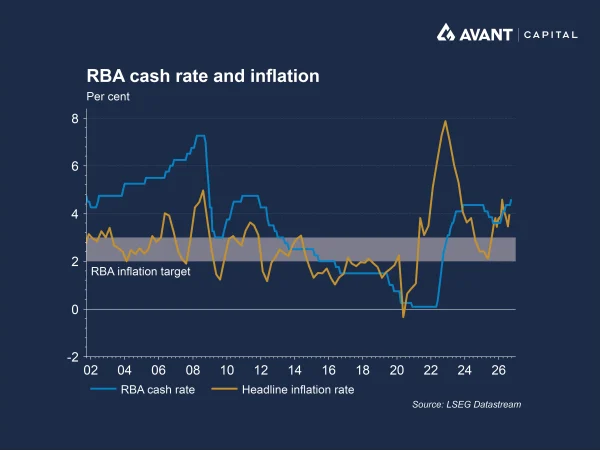
For investors, the implications extend well beyond mortgage rates. A higher cash rate changes the relative appeal of cash, affects bond prices and yields, raises the discount rate applied to company earnings and influences the outlook for economic growth. The challenge is that inflation is being driven by a mixture of persistent domestic pressures and renewed global shocks, leaving the path of interest rates unusually uncertain.
What did the RBA decide, and why?
The RBA’s nine-member monetary policy board voted unanimously to increase the cash rate by 0.25 percentage points to 4.6%. The decision reflected the board’s assessment that inflation remained too high and that some previously identified upside risks had begun to materialise. The RBA also retained the option of raising rates again if necessary to prevent elevated inflation from becoming embedded in wages, prices and expectations.
The increase was widely anticipated, but the communication surrounding the decision was more nuanced. Governor Michele Bullock described monetary policy as restrictive and emphasised that earlier increases could take up to 12 months to work through household spending, business activity and the labour market. Markets interpreted those comments as less hawkish than expected. The implied probability of another increase in November fell to 38% from 44% immediately before the meeting, although investors continued to price a further rise by early 20272.
This distinction matters. The RBA is not signalling that the inflation fight is complete, but neither is it committing to a predetermined sequence of increases. Its decisions will depend on incoming inflation, employment and activity data, as well as evidence that tighter financial conditions are slowing demand. The board has said aggregate demand needs to remain subdued for a period to return inflation sustainably to its 2 to 3% target.
What is driving the inflation picture?
The inflation story has both domestic and international dimensions. Headline inflation rose from 3.5% in July to 4% in August, partly because petrol prices increased 14.8% after the temporary fuel-excise reduction ended3. The cost of building a new home was also 5.4% higher over the year, reflecting rising material and labour expenses. More importantly for the RBA, trimmed mean inflation remained at 3.6% for a third consecutive month, showing that underlying price pressures were not yet easing convincingly.
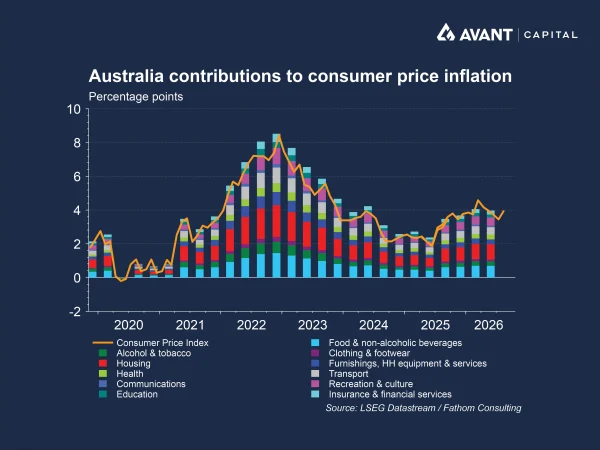
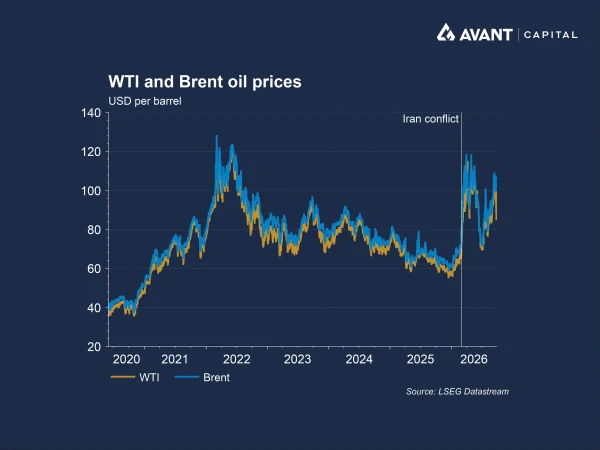
Global energy disruption has added to these pressures, while the artificial-intelligence investment boom has increased demand for technology inputs, capital, commodities and data-centre construction. However, the RBA’s view is that the inflation challenge predates those shocks. Strong domestic spending, limited spare capacity, a tight labour market and weak productivity have left the economy vulnerable to additional cost increases.
Construction illustrates the problem. Residential, infrastructure, renewable-energy and data-centre projects are competing for scarce workers and materials. Building approvals by value are expected to reach as much as 11% of gross domestic product, while construction-sector unemployment has been reported at only 2.6%4. When supply cannot expand quickly enough, additional demand is more likely to raise prices than output.
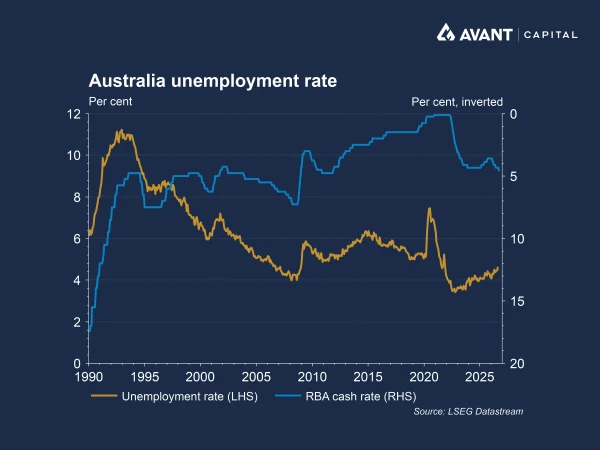
The labour market therefore remains central to the outlook. Michele Bullock has indicated that unemployment may need to move into a range of 4.5 to 5% to reduce inflation pressure5. That does not necessarily imply widespread retrenchments, but it could mean slower hiring and longer job searches as monetary tightening takes effect.
What does it mean for cash and fixed income?
Higher policy rates generally improve the income available from cash accounts, term deposits and short-dated fixed-income securities. However, investors must consider the return after inflation. A higher nominal interest rate does not automatically produce a stronger real return if consumer prices are also rising quickly.
For bonds, the starting yield is now more attractive than it was during the ultra-low-rate period, but market volatility remains elevated. Following the September decision, Australia’s three-year government bond yield declined by 7 basis points to 4.97%, while the 10-year yield fell by 4 basis points to 5.38%. These falls occurred because the Governor’s comments were interpreted as reducing the immediate risk of aggressive additional tightening. Even so, longer-term yields remained near 15-year highs amid sticky inflation, higher energy prices and rising global government borrowing costs.
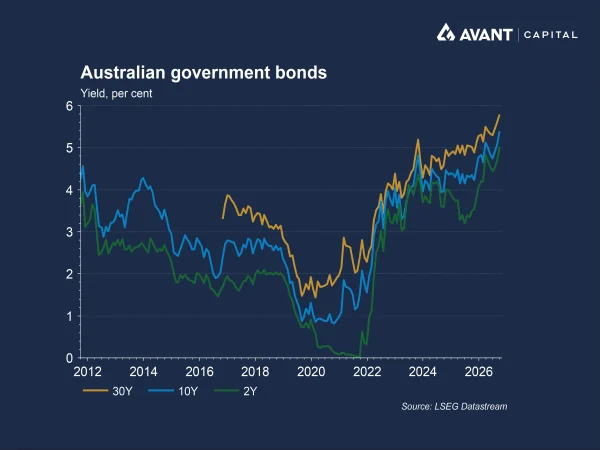
Duration is a measure of a bond portfolio’s sensitivity to interest-rate changes. In simple terms, a bond with longer duration will generally experience a larger price movement when yields change. If yields rise, longer-duration bond prices typically fall more sharply. If yields decline, they may gain more. This means higher starting yields can improve prospective income, but uncertainty about inflation and the eventual peak in the cash rate can still produce meaningful capital-price movements.
What does it mean for Australian equities?
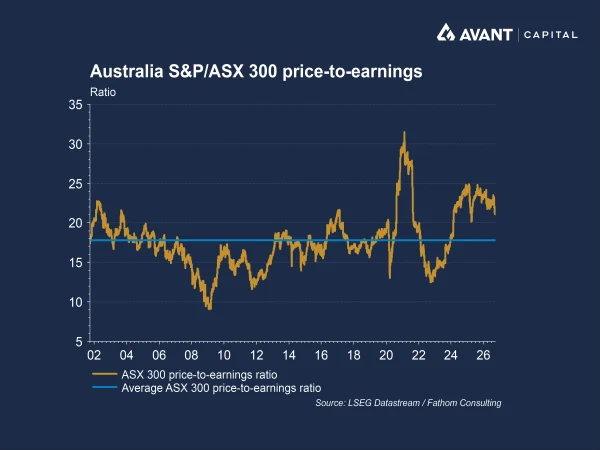
Higher interest rates can affect Australian shares through several channels. They increase financing costs, reduce household disposable income and lift the rate investors use to value future company earnings. All else being equal, a higher discount rate lowers the present value of profits expected further into the future. Elevated valuations across parts of the Australian share market may amplify this risk, as investors could become less willing to pay high multiples if interest rates remain restrictive or earnings expectations weaken. This can be particularly relevant for highly valued businesses whose investment case depends heavily on distant earnings.
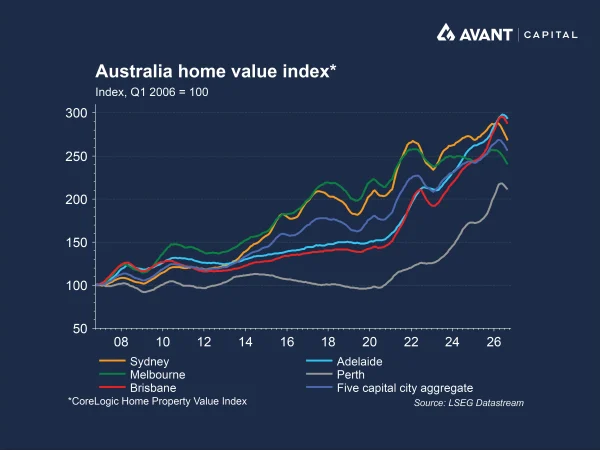
The consequences will not be uniform. Companies with substantial debt, weak interest coverage or limited pricing power may find the environment more challenging. Consumer-facing businesses may also encounter slower demand as mortgage payments absorb a larger share of household income. For a household with a $750,000 mortgage, the latest increase was estimated to add about $115 to monthly repayments and approximately $450 a month compared with the beginning of 20266. Higher borrowing costs could also slow the housing market, creating headwinds for residential developers, building-material suppliers and other housing-exposed companies.
At the same time, higher rates can support interest income for some financial businesses, while persistent construction, infrastructure and data-centre activity may sustain revenues for selected companies. Yet these opportunities come with risks from labour shortages, cost escalation and weaker project economics. The broader equity-market outcome will depend on whether the RBA can cool inflation without causing a pronounced decline in employment, consumption and corporate earnings.
For Australian investors, the key message is not simply that rates are high. It is that interest rates may remain restrictive until underlying inflation shows a durable return towards target. In that environment, company balance-sheet strength, earnings resilience, valuation discipline and portfolio diversification are likely to remain important considerations.
References
- The Australian Financial Review, “Bullock rebuffs Chalmers’ inflation defence as RBA delivers 15-year rate high,” 29 September 2026
- The Australian Financial Review, “$A hits two-month lows as traders temper RBA rate rise bets,” 29 September 2026
- The Australian Financial Review, “Inflation jump keeps pressure on RBA to raise rates,” 30 September 2026
- The Australian Financial Review, “RBA faces rate squeeze as 60-year building surge fires up inflation,” 28 September 2026
- The Australian Financial Review, “Higher unemployment needed to rein in inflation: Bullock,” 22 September 2026
- The Australian Financial Review, “Plenty of blame to go around for RBA rates hitting 15-year high,” 29 September 2026