The US Federal Reserve has once again left interest rates unchanged, maintaining its benchmark federal funds rate at 3.5 to 3.75%. While the decision itself was widely expected, the market reaction was anything but routine. Investors were confronted with a central bank facing persistent inflation, growing internal disagreement among policymakers and a new communication strategy under Chair Kevin Warsh that has generated as many questions as answers1.
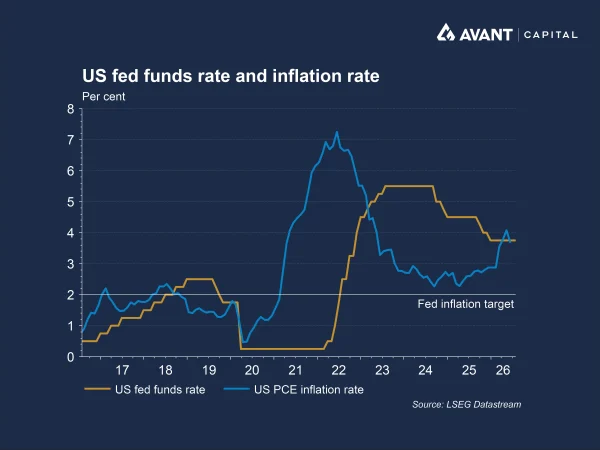
The decision comes at a particularly challenging moment for policymakers. Inflation remains above the Fed’s 2% target after more than five years, while a renewed escalation of conflict in the Middle East has pushed oil prices higher and reignited concerns about another inflationary shock. At the same time, the US economy continues to display surprising resilience, supported by strong consumer spending and ongoing investment related to artificial intelligence infrastructure.
What made this meeting different from previous decisions?
Although the Federal Open Market Committee ultimately voted 9-3 to leave rates unchanged, the three dissenting votes attracted significant attention. Cleveland Fed President Beth Hammack, Minneapolis Fed President Neel Kashkari and Dallas Fed President Lorie Logan all favoured an immediate quarter-point rate increase. It was the first time since 2016 that three policymakers dissented in the same direction, signalling growing concern within the Fed about the persistence of inflationary pressures.
Many officials appear increasingly concerned that inflation risks are no longer confined to temporary shocks. Alongside higher energy prices resulting from geopolitical tensions, policymakers are also grappling with demand generated by the AI investment boom, which has fuelled substantial spending on data centres, computing infrastructure and technology development. Some Fed officials believe these forces could keep inflation elevated for longer than previously anticipated.
Why is Kevin Warsh’s communication strategy drawing attention?
A defining feature of Kevin Warsh’s leadership has been his decision to reduce forward guidance, arguing that markets should react more directly to economic developments rather than attempting to interpret every signal from the central bank. Warsh has repeatedly stated that markets are “learning to play the ball and not the referee” and has suggested that rising market interest rates between Fed meetings have already delivered some of the tightening that would normally occur through formal rate increases2.
Warsh maintains that the Fed remains firmly committed to returning inflation to its 2% target and has insisted that the central bank “will not waver” in its responsibility to achieve price stability3. However, his reluctance to clearly indicate how and when the Fed might respond to future inflation developments has left investors uncertain about the policy path ahead.
The debate surrounding this new approach has become one of the most closely watched aspects of Fed policy. Supporters argue that less guidance encourages genuine market price discovery, while critics contend that markets function more effectively when policymakers provide a clearer framework for decision-making.
How did financial markets respond?
The market response suggested investors remain unconvinced that inflation risks are fully under control. Following the Fed announcement and Warsh’s press conference, long-term Treasury yields climbed sharply, with the 30-year Treasury yield reaching approximately 5.2%, its highest level since 2007.
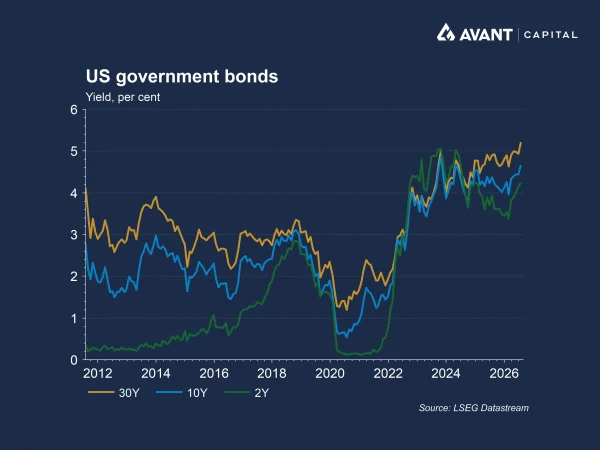
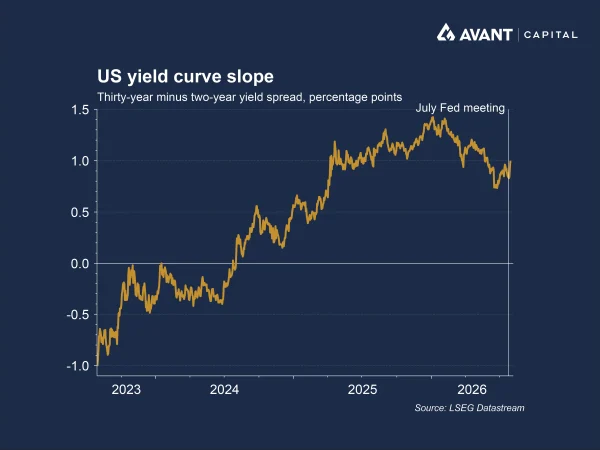
At the same time, short-term Treasury yields declined, reflecting expectations that the Fed may delay further policy tightening. This unusual divergence between long and short-term yields suggested investors were becoming increasingly concerned about longer-term inflation prospects while simultaneously doubting the likelihood of immediate rate increases.
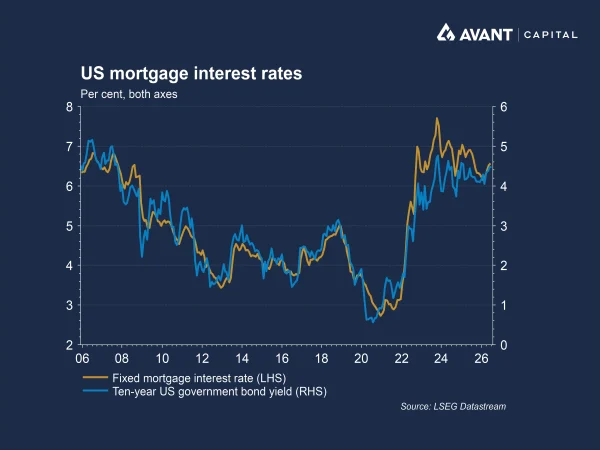
Equity markets reacted negatively as well, as higher long-term interest rates create challenges for equity valuations and increase borrowing costs throughout the economy, affecting businesses, consumers and the housing market.
What economic forces are complicating the inflation outlook?
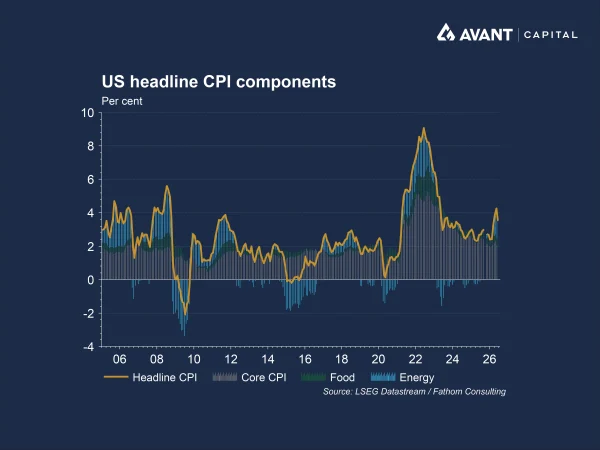
The Fed faces a particularly difficult challenge because inflation is being influenced by several overlapping factors. The renewed conflict involving Iran has contributed to higher oil prices, increasing concerns about future fuel and transportation costs. Meanwhile, tariff policies continue to create uncertainty around prices and supply chains.
At the same time, the AI-driven investment boom is reshaping the economy. Massive spending on technology infrastructure is supporting economic growth and productivity, but it is also creating significant demand pressures. A growing number of policymakers argue that this investment cycle may be contributing to inflation in ways that standard economic models struggle to capture.
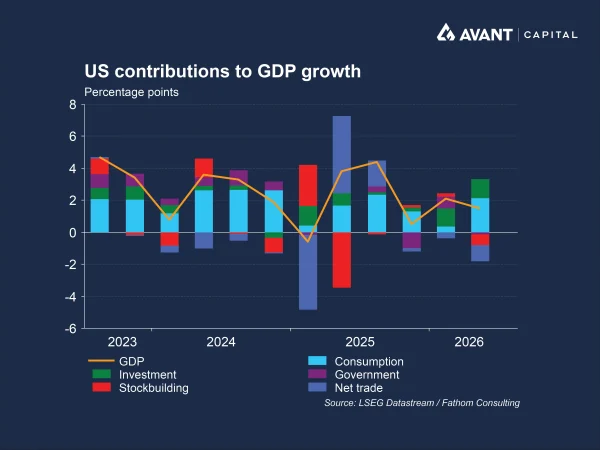
Importantly, the broader economy remains relatively strong. US GDP grew at an annualised rate of 1.5% in the second quarter, while consumer spending accelerated and business investment remained robust4. The labour market also continues to perform reasonably well, even though recent employment data have softened somewhat.
What could happen next?
Attention is now turning to the Fed’s September meeting. Markets increasingly expect policymakers will need to consider a rate increase if inflation remains elevated or energy prices continue rising. Futures markets have already begun pricing in a meaningful probability of further tightening later this year.
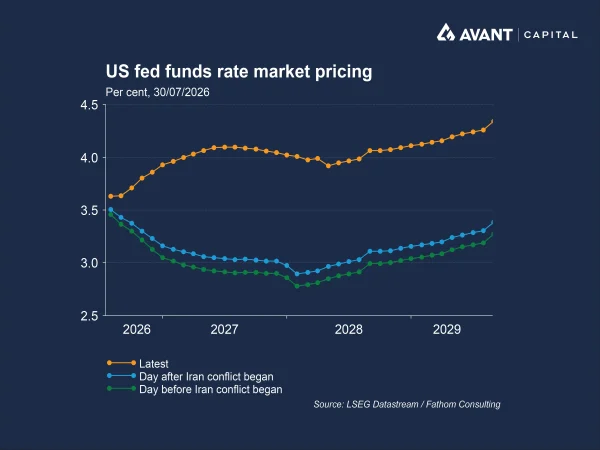
For now, the central bank is attempting to balance competing risks. Moving too quickly could unnecessarily slow economic activity, while waiting too long risks allowing inflation expectations to become entrenched. The challenge for Warsh will be convincing investors that the Fed remains committed to its inflation target while maintaining confidence in a new communication model that is still undergoing its first real test.
The July decision ultimately highlighted a central reality facing the Federal Reserve: inflation may be lower than its peak, but the battle to return it to target is proving more complex, and potentially more politically and economically sensitive, than many policymakers expected.
References
- The Wall Street Journal, “Fed holds rates steady but three officials vote for increase,” 29 July 2026
- The Wall Street Journal, “Warsh, the Fed, and market signals,” 29 July 2026
- Financial Times, “US borrowing costs hit 19-year high as Fed defies inflation fears,” 31 July 2026
- The Wall Street Journal, “U.S. economic growth slowed to 1.5% in second quarter,” 30 July 2026